

Hair loss rarely announces itself all at once. It shows up first as a few more strands on the pillow, then a hairline that photographs differently than it used to, then a moment in front of the mirror where you finally admit something has changed.
For a lot of men, that moment is quieter and more emotional than they expected. It is not really about vanity. It is about recognizing yourself.
Kirkland minoxidil 5% has become part of how many men respond to that moment, not as a miracle fix, but as a practical first step that puts some control back in their hands.
Why This Particular Product Keeps Coming Up
Minoxidil itself is not new. It has been studied for decades as a topical treatment for hereditary hair loss, and the 5% strength is the standard dose recommended for men.
What makes the Kirkland version stand out in beauty and grooming conversations is less about the formula and more about accessibility.
It uses the same active ingredient found in pricier branded treatments, at a lower monthly cost, which matters when you are looking at something that only works if you keep using it.
That last part is what people consistently underestimate. Minoxidil is not something you try for two weeks and then judge.
It is a routine, closer to brushing your teeth than to a quick fix, and the results depend almost entirely on whether you keep showing up for it.
The Timeline Nobody Really Explains Well
This is where a lot of men get discouraged early, often before the treatment has had a fair chance to work.
In the first two to eight weeks, some shedding is normal. It sounds alarming, but it usually means older hairs in a resting phase are being pushed out to make room for new growth.
It is a sign the scalp is responding, not a sign that things are going wrong.
Around the third and fourth month, thin new hairs typically start appearing in the treated areas.
By months four through six, those hairs often thicken enough that the difference becomes visible, not just to you but to people around you.
This slow arc is exactly why single-month purchases tend to let people down.
A one-month bottle usually runs out right around the point where nothing visible has happened yet, and that is precisely when many men quit.
A three-month supply is built around this biology rather than just around convenience.
It carries someone through the discouraging stretch and into the point where a real, informed decision can actually be made.
Building a Routine That Actually Sticks
The application itself is simple enough. One milliliter, applied with a dropper directly to a dry scalp, twice a day, focused on the thinning area rather than the hair itself.
Wash your hands afterward, and give the lotion a couple of hours to dry before bed or styling.
None of this is complicated, but staying consistent is the real hurdle, not the technique.
A habit that many users swear by is pairing the application with something already automatic in their day, like brushing your teeth at night, so the treatment does not rely on willpower alone to happen twice a day.
Small friction points, like a dropper getting misplaced or running low on product, can quietly break months of good momentum, so keeping enough supply on hand matters more than most people initially think.
The Trade-offs Worth Knowing
No treatment is completely without downsides, and minoxidil is upfront about its limitations.
The lotion form contains propylene glycol, which helps carry the active ingredient into the scalp but can also cause dryness or itchiness for some users, especially in the early weeks.
People sensitive to it often switch to foam versions instead, which skip that ingredient but typically cost more per month.
There are also standard precautions.
It is generally not recommended for anyone under eighteen, and people who are pregnant, breastfeeding, or managing cardiovascular conditions should speak with a doctor before starting, since minoxidil can affect blood pressure.
There is also an unavoidable reality about stopping.
If treatment is paused, any gains made typically reverse within a few months, and hair tends to return to where it would have been without intervention.
That is not exactly a flaw; it is more of a reminder that this is long-term maintenance, not a cure.
Where the Confidence Part Comes In
What gets overlooked in ingredient lists and dropper instructions is the real reason most men start doing this in the first place.
Hair carries personal weight that has nothing to do with fashion. It is tied to how old someone feels, how they look in photos, how they carry themselves in a room.
Deciding to treat hair loss, even through something as unglamorous as a daily dropper routine, is less about chasing a thicker hairline and more about refusing to just watch it happen without doing anything.
Something worth noting here is that good scalp health does not exist in isolation.
Understanding the importance of blood circulation in maintaining good skin conditions, including the scalp, is part of why minoxidil works in the first place.
The treatment is believed to widen blood vessels and improve blood flow to hair follicles, which is what keeps them active and producing.
That biology is the foundation the whole routine is built on.
The science is well documented, and the timeline is predictable enough to plan around.
What varies is the person applying it every morning and night, choosing to stay with something slow and unglamorous because the payoff, when it finally shows up, tends to be worth every quiet month of waiting.
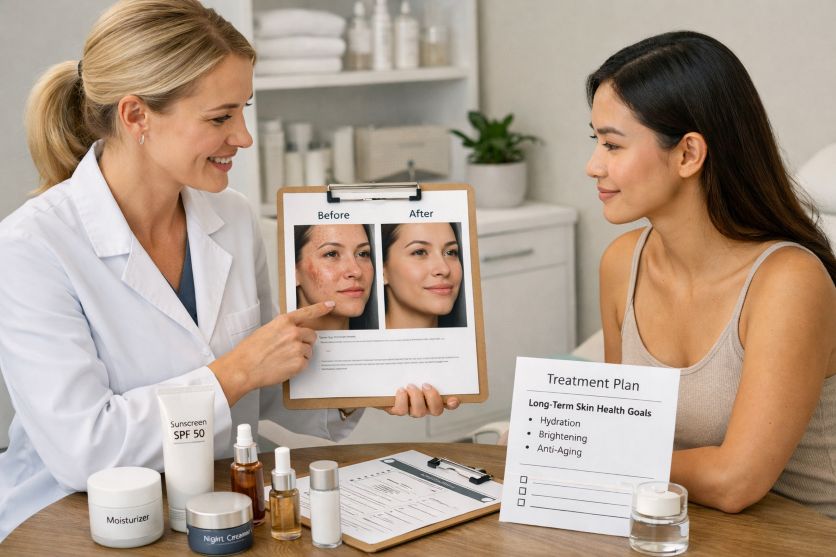
 Looking for the appropriate med spa is generally important, especially if you want to experience a safe and satisfying outcome. The first thing to be considered is the professional capabilities of the doctors. A good med spa will have licensed workers who are experienced in dermatology and aesthetic medicine. Just as important is the variety of services provided. A comprehensive facility offers various treatment methods, enabling a more customized skin care approach.